
Introduction
Psoriasis is one of the chronic skin conditions for which patients often seek long-term, individualized care because flares tend to recur and visible lesions can be frustrating. The disease may affect the scalp, elbows, knees, trunk, nails, or joints, and its impact often extends beyond the skin into confidence, sleep, and daily comfort.
Because psoriasis and chronic inflammatory skin flare patterns can present differently from person to person, it deserves an individualized evaluation rather than a one-size-fits-all approach. Many readers looking for a homeopathy clinic in Vadodara want patient education that is practical, balanced, and medically responsible. This article explains what people commonly notice, how doctors assess the issue, where lifestyle measures fit in, and how an experienced homeopathy doctor in Vadodara may think about supportive care alongside standard medical guidance.
Symptoms
Symptoms often reflect the stage, trigger pattern, and the patient's overall health. Some people notice mild changes that build slowly, while others experience episodes that are uncomfortable enough to affect sleep, work, confidence, or daily routines.
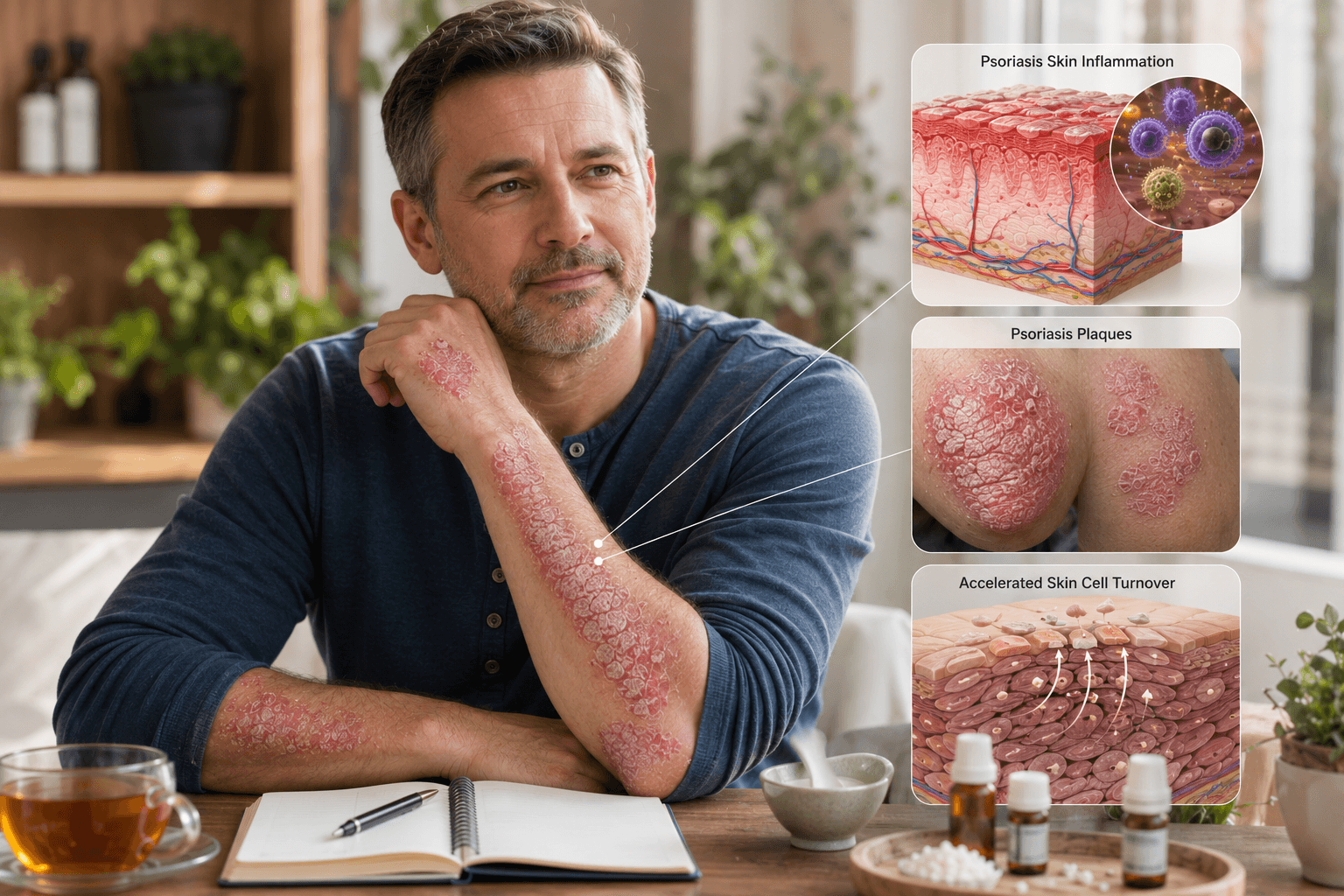
Many patients describe dry, thick plaques and scaling, but there can also be soreness, cracking, itch, scalp shedding, or embarrassment when the skin is exposed in social settings.
Common Symptoms
- Thick red plaques with scales
- Dryness and cracking
- Scalp involvement with visible flaking
- Itching or burning sensation
- Nail changes in some patients
- Joint discomfort in selected cases
When to Seek Medical Assessment
Joint pain, extensive body involvement, severe cracking, infection, or major emotional distress should prompt professional medical review alongside any complementary treatment decisions. Even when symptoms sound familiar, professional assessment is important if the condition is persistent, recurrent, severe, or interfering with eating, breathing, hydration, urination, bowel habits, mobility, or day-to-day wellbeing.
Causes
The condition is driven by inflammatory immune activity interacting with genetic predisposition and flare triggers such as stress, infection, skin injury, smoking, and weather.
In real life, there is often no single explanation. Genetics, environment, diet, hormones, infection, stress, inflammation, and lifestyle patterns can interact over time. Understanding the likely contributors helps patients ask better questions and helps clinicians plan investigations or supportive care more thoughtfully.
- Immune-mediated inflammation
- Genetic predisposition
- Stress and sleep disruption
- Infections and inflammatory triggers
- Skin trauma or friction
- Smoking and alcohol in some patients
Risk Factors
Long-standing psoriasis may also be associated with metabolic or inflammatory concerns in some patients, so care should focus on overall health and not only on the visible plaques.
A risk factor does not guarantee that a person will develop the condition, and someone without obvious risk factors can still experience symptoms. Even so, knowing these patterns is useful because it highlights where prevention, earlier consultation, or closer follow-up may be sensible.
- Family history
- Chronic stress
- Smoking
- Cold and dry climate exposure
- Obesity or metabolic strain
- History of repeated skin flare triggers
Diagnosis
Diagnosis is usually clinical, and the exact pattern helps determine whether the issue is plaque psoriasis, scalp-predominant disease, palm and sole involvement, or a condition that resembles psoriasis but is actually something else.
Skin examination, family history, and in some cases dermatology review help establish the diagnosis. If joint symptoms are present, the possibility of psoriatic arthritis should also be considered because it changes long-term management priorities.
Homeopathic Perspective
Homeopathic care is often chosen by patients who want a personalized understanding of chronic skin flare patterns rather than isolated treatment of each visible patch.
At Pure Life Homeopathy Vadodara, consultation may consider skin distribution, itching pattern, sensitivity to weather, digestive state, emotional stress, sleep, and constitutional features. The role of homeopathy should still be described responsibly: it may be supportive, but it should not replace dermatology review when disease is severe, infected, or associated with joint involvement.
At Pure Life Homeopathy Vadodara, consultation is typically centered on the individual rather than on a label alone. A homeopathic treatment plan may consider the symptom timeline, triggers, sleep, appetite, stress pattern, temperature preference, sensitivities, and overall constitution. Homeopathy should be used responsibly and does not replace emergency care, specialist referral, imaging, laboratory work, or conventional treatment when those are necessary.
Lifestyle Recommendations
Long-term psoriasis care is usually steadier when skin protection and flare awareness become everyday habits rather than crisis-only measures.
Lifestyle changes are most useful when they are realistic and consistent. Small, repeatable adjustments often do more for long-term progress than extreme short-term routines, especially in chronic conditions that need monitoring over months rather than days.
- Use gentle moisturizing routines consistently
- Avoid picking or aggressive friction over plaques
- Track personal flare triggers including stress and weather
- Review scalp and nail symptoms early
- Maintain general metabolic health and sleep quality
- Seek joint assessment if stiffness or swelling develops
FAQ
Why do psoriasis flares keep coming back?
Psoriasis tends to recur because the underlying immune tendency remains even when skin improves temporarily. Flares often rise with triggers such as stress, winter weather, infections, or friction. Long-term management therefore focuses on reducing flare intensity and frequency rather than expecting a one-time permanent switch-off.
Can psoriasis be confused with eczema?
Yes. Some early or atypical cases may resemble eczema or fungal problems, which is why proper assessment matters. The appearance, scaling pattern, location, family history, and trigger profile often help distinguish the diagnosis more clearly.
Can homeopathy be part of long-term psoriasis care?
Some patients include homeopathy as part of a broader chronic-care plan, especially when they want a constitutional, individualized consultation. The key is to keep expectations realistic and continue appropriate skin and medical follow-up when symptoms are significant.
Conclusion
Psoriasis care is most useful when it combines symptom understanding, trigger awareness, and realistic long-term planning. A thoughtful supportive approach can help patients feel more informed and less overwhelmed by recurring flares.
If you want an individualized discussion about symptoms, triggers, and supportive homeopathic treatment in Vadodara, Pure Life Homeopathy, Vadodara offers consultation-focused care aimed at patient education, realistic expectations, and a treatment plan tailored to the person rather than just the diagnosis.