
Introduction
Female infertility is not a single disease but a broad clinical concern used when pregnancy does not occur after an appropriate period of trying, depending on age and medical context. It often brings emotional strain, repeated questions, financial pressure, and uncertainty, which is why patient education should be compassionate as well as medically clear.
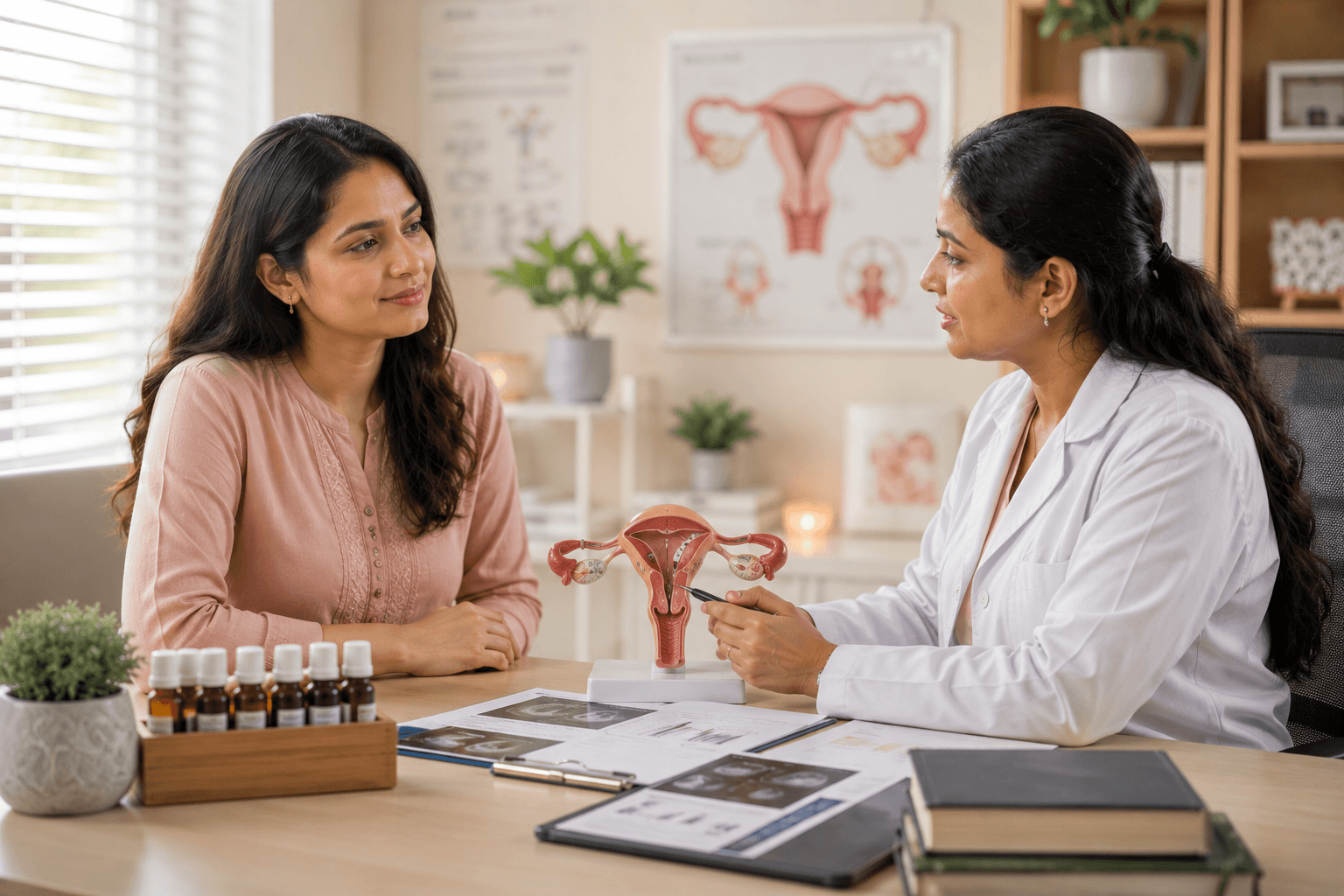
Because female infertility can present differently from person to person, it deserves an individualized evaluation rather than a one-size-fits-all approach. Many readers looking for a homeopathy clinic in Vadodara want patient education that is practical, balanced, and medically responsible. This article explains what people commonly notice, how doctors assess the issue, where lifestyle measures fit in, and how an experienced homeopathy doctor in Vadodara may think about supportive care alongside standard medical guidance.
Symptoms
Symptoms often reflect the stage, trigger pattern, and the patient's overall health. Some people notice mild changes that build slowly, while others experience episodes that are uncomfortable enough to affect sleep, work, confidence, or daily routines.
Infertility itself may have no obvious symptoms apart from difficulty conceiving, but many women also report irregular cycles, painful periods, weight changes, acne, heavy bleeding, pelvic pain, or signs that suggest hormonal or structural causes.
Common Symptoms
- Difficulty conceiving despite regular attempts
- Irregular, absent, or infrequent periods
- Painful periods or pelvic discomfort
- Heavy bleeding or very scanty flow
- Signs of hormonal imbalance such as acne or excess hair growth
- History of miscarriage or reproductive health concerns in some cases
When to Seek Medical Assessment
Professional gynecologic evaluation should not be delayed if cycles are very irregular, pelvic pain is significant, age is advancing, there is a known reproductive condition, or conception has not occurred within the recommended time frame. Even when symptoms sound familiar, professional assessment is important if the condition is persistent, recurrent, severe, or interfering with eating, breathing, hydration, urination, bowel habits, mobility, or day-to-day wellbeing.
Causes
The causes of infertility are diverse and may involve ovulation problems, hormonal imbalance, tubal issues, uterine factors, endometriosis, thyroid problems, age-related decline, or partner-related factors. A balanced evaluation always considers both partners when appropriate.
In real life, there is often no single explanation. Genetics, environment, diet, hormones, infection, stress, inflammation, and lifestyle patterns can interact over time. Understanding the likely contributors helps patients ask better questions and helps clinicians plan investigations or supportive care more thoughtfully.
- Ovulation disorders including PCOS
- Thyroid imbalance or prolactin-related issues
- Tubal blockage or prior pelvic infection
- Endometriosis or uterine structural problems
- Age-related ovarian reserve decline
- Lifestyle, weight, or metabolic factors
Risk Factors
Age remains a major fertility factor, but it is not the only one. Menstrual history, prior infection, hormonal health, metabolic profile, and pelvic conditions also shape the overall picture.
A risk factor does not guarantee that a person will develop the condition, and someone without obvious risk factors can still experience symptoms. Even so, knowing these patterns is useful because it highlights where prevention, earlier consultation, or closer follow-up may be sensible.
- Increasing maternal age
- Irregular or absent ovulation
- Known PCOS, endometriosis, or fibroids
- Thyroid disease or high stress burden
- Obesity, undernutrition, or significant weight fluctuation
- Previous pelvic surgery or infection
Diagnosis
Diagnosis is usually systematic and should not be guessed from one symptom alone. Gynecologists often review cycle pattern, hormone profile, ultrasound findings, ovulation status, ovarian reserve, uterine anatomy, and the possibility of tubal or pelvic causes.
Tests may include hormone workup, thyroid evaluation, ultrasound, ovulation tracking, hysterosalpingography, or other fertility assessments. Good fertility care depends on identifying whether the main challenge is ovulation, implantation, tubal patency, hormonal signaling, or a mixed-factor situation.
Homeopathic Perspective
Some women explore homeopathy when they want a more individualized and holistic discussion of cycle pattern, stress, sleep, digestion, and constitutional health while they are undergoing fertility evaluation.
A homeopathy doctor in Vadodara may focus on the broader reproductive profile rather than promising direct restoration of fertility in every case. It is important to avoid exaggerated claims here. Fertility concerns deserve evidence-based gynecologic assessment, and homeopathy, if used, should be positioned as supportive care within a larger reproductive health plan.
At Pure Life Homeopathy Vadodara, consultation is typically centered on the individual rather than on a label alone. A homeopathic treatment plan may consider the symptom timeline, triggers, sleep, appetite, stress pattern, temperature preference, sensitivities, and overall constitution. Homeopathy should be used responsibly and does not replace emergency care, specialist referral, imaging, laboratory work, or conventional treatment when those are necessary.
Lifestyle Recommendations
Lifestyle matters because ovulation, metabolic health, sleep, and stress can all influence fertility potential. Even modest changes can improve the overall treatment environment for some patients.
Lifestyle changes are most useful when they are realistic and consistent. Small, repeatable adjustments often do more for long-term progress than extreme short-term routines, especially in chronic conditions that need monitoring over months rather than days.
- Maintain a healthy weight range with professional guidance
- Track menstrual cycles and ovulation pattern carefully
- Address thyroid, insulin resistance, or metabolic issues early
- Reduce smoking, excessive alcohol, and sleep disruption
- Seek early fertility evaluation when age or symptoms suggest it
- Approach stress management as supportive, not as a substitute for workup
FAQ
Can homeopathy guarantee pregnancy?
No responsible practitioner should promise guaranteed pregnancy through homeopathy or any single treatment system. Fertility depends on multiple factors including age, ovulation, tubal health, partner factors, uterine conditions, and overall metabolic health. Supportive care may be individualized, but expectations should remain realistic and medically grounded.
When should infertility evaluation begin?
The timing depends on age and menstrual history, but evaluation is usually recommended sooner when cycles are irregular, pelvic symptoms are present, or age is a significant factor. Rather than waiting indefinitely, an early assessment often saves time and provides clarity about what is actually affecting conception.
Does stress alone cause infertility?
Stress can influence hormones, sleep, and cycle regularity, but infertility should not automatically be blamed on stress alone. In many women there are clear physiologic factors that need proper diagnosis. Stress care is supportive and valuable, but it should be part of a broader medical evaluation rather than the only explanation offered.
Conclusion
Female infertility deserves a thoughtful, compassionate, and medically complete evaluation. The most helpful path usually combines timely investigation, realistic counseling, and individualized support instead of relying on assumptions or promises of a quick cure.
If you want an individualized discussion about symptoms, triggers, and supportive homeopathic treatment in Vadodara, Pure Life Homeopathy, Vadodara offers consultation-focused care aimed at patient education, realistic expectations, and a treatment plan tailored to the person rather than just the diagnosis.