
Introduction
Kidney stone treatment is not only about getting through the painful episode; it is also about understanding why the stone formed and how to reduce the chance of another attack. For many patients, the first experience becomes a wake-up call about hydration, diet, and preventive follow-up, especially if the pain was sudden and severe.
Because kidney stone disease can present differently from person to person, it deserves an individualized evaluation rather than a one-size-fits-all approach. Many readers looking for a homeopathy clinic in Vadodara want patient education that is practical, balanced, and medically responsible. This article explains what people commonly notice, how doctors assess the issue, where lifestyle measures fit in, and how an experienced homeopathy doctor in Vadodara may think about supportive care alongside standard medical guidance.
Symptoms
Symptoms often reflect the stage, trigger pattern, and the patient's overall health. Some people notice mild changes that build slowly, while others experience episodes that are uncomfortable enough to affect sleep, work, confidence, or daily routines.
Symptoms can overlap with the previous article's description because kidney stones often present in similar ways, but treatment decisions differ based on size, obstruction, infection risk, and whether the person has had stones before.
Common Symptoms
- Flank pain that may radiate to the groin
- Burning or difficulty while urinating
- Blood in urine
- Urgency or frequency when a stone is lower in the tract
- Nausea or sweating during painful episodes
- Intermittent waves of pain rather than constant mild discomfort
When to Seek Medical Assessment
High fever, chills, inability to pass urine, persistent vomiting, severe weakness, or intense pain not responding to immediate measures should be treated as urgent medical issues. Even when symptoms sound familiar, professional assessment is important if the condition is persistent, recurrent, severe, or interfering with eating, breathing, hydration, urination, bowel habits, mobility, or day-to-day wellbeing.
Causes
Treatment planning begins with cause analysis. A stone formed from dehydration may need a different long-term discussion than a stone linked to uric acid tendency, repeated infection, or metabolic disease.
In real life, there is often no single explanation. Genetics, environment, diet, hormones, infection, stress, inflammation, and lifestyle patterns can interact over time. Understanding the likely contributors helps patients ask better questions and helps clinicians plan investigations or supportive care more thoughtfully.
- Concentrated urine from inadequate hydration
- High sodium or high-oxalate dietary patterns in selected cases
- Metabolic tendencies affecting calcium or uric acid handling
- Family history of stones
- Hot weather and repeated fluid loss
- Associated medical conditions such as gout or bowel disorders
Risk Factors
Recurrence risk is especially important in treatment planning because many patients who feel better after one attack never investigate why it happened.
A risk factor does not guarantee that a person will develop the condition, and someone without obvious risk factors can still experience symptoms. Even so, knowing these patterns is useful because it highlights where prevention, earlier consultation, or closer follow-up may be sensible.
- Prior stone history
- Male sex in some populations, though women are also affected
- Obesity and metabolic syndrome
- Repeated dehydration
- High-salt dietary pattern
- Family tendency toward kidney stones
Diagnosis
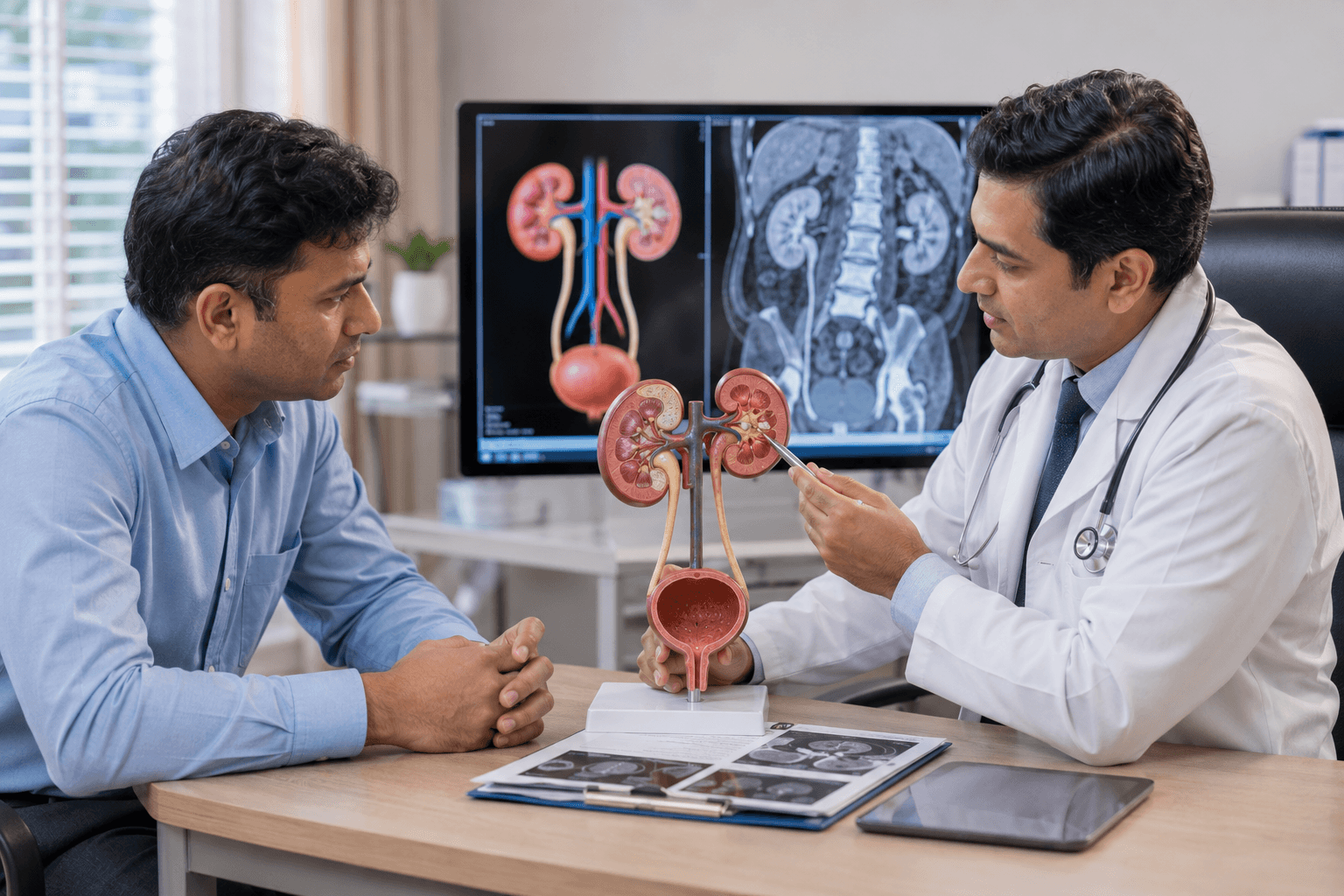
Diagnosis typically relies on symptoms, urine findings, and imaging, but treatment decisions go beyond confirming that a stone exists. Clinicians look at where the stone is, whether it is moving, and whether the kidney is under pressure.
Some stones can be monitored with hydration, pain control, and follow-up. Others require urologic procedures because of size, location, infection, or obstruction. Recurrent patients may also benefit from metabolic review so prevention can be more targeted and not purely trial-and-error.
Homeopathic Perspective
A homeopathic perspective usually enters when patients want a recurrence-focused, individualized discussion in addition to standard stone care.
At Pure Life Homeopathy Vadodara, kidney stone consultations may review pain characteristics, urinary discomfort, diet, family history, and broader health tendencies. That said, homeopathy should be positioned as supportive care and not as a replacement for urology when imaging shows a high-risk stone or complications.
At Pure Life Homeopathy Vadodara, consultation is typically centered on the individual rather than on a label alone. A homeopathic treatment plan may consider the symptom timeline, triggers, sleep, appetite, stress pattern, temperature preference, sensitivities, and overall constitution. Homeopathy should be used responsibly and does not replace emergency care, specialist referral, imaging, laboratory work, or conventional treatment when those are necessary.
Lifestyle Recommendations
Long-term prevention usually determines whether a patient remains symptom-free after the first episode or keeps returning with repeated stone formation.
Lifestyle changes are most useful when they are realistic and consistent. Small, repeatable adjustments often do more for long-term progress than extreme short-term routines, especially in chronic conditions that need monitoring over months rather than days.
- Spread water intake through the day instead of drinking large amounts at once
- Moderate salt and processed food intake
- Discuss stone composition if a stone has been analyzed
- Continue follow-up even after pain improves
- Avoid assuming all flank pain is harmless after a previous stone
- Review risk factors such as obesity, gout, or bowel disease with a doctor
FAQ
Why is follow-up needed even after the stone passes?
Follow-up matters because the event itself suggests a predisposition. Without prevention advice, hydration changes, and sometimes metabolic assessment, many patients experience another stone. Follow-up also confirms that obstruction has resolved and that no additional stones are silently present.
Can every kidney stone be treated without a procedure?
No. Smaller stones sometimes pass naturally, but larger stones, infected stones, or obstructive stones may require urologic treatment. The decision depends on size, location, complications, and patient factors. Delaying intervention when it is clearly needed can increase pain and risk harm to the kidney.
What is the most useful preventive habit?
For many people, consistent hydration is the single most useful starting habit, but prevention should not stop there. Salt moderation, stone-type guidance, weight management, and follow-up for metabolic causes may all matter depending on the patient's history and test results.
Conclusion
Coping with kidney stones becomes easier when treatment is paired with prevention. The most effective plan is one that respects the urgency of painful episodes while also addressing the reasons the stone formed in the first place.
If you want an individualized discussion about symptoms, triggers, and supportive homeopathic treatment in Vadodara, Pure Life Homeopathy, Vadodara offers consultation-focused care aimed at patient education, realistic expectations, and a treatment plan tailored to the person rather than just the diagnosis.